Letting the Wheel of the Year Hold the Curriculum in Nature-Based Education
The Rhythm of the Seasons
In our nature-based, Waldorf-inspired program in Boulder, Colorado, we often let the Wheel of the Year guide the curriculum.
What should our days be like? What should we fill them with?
Nature knows how to do this!
When we work with the Wheel of the Year within our nature-based activities at Sage Programs in Boulder CO, we aren’t trying to build a curriculum. We’re letting the seasons hold it. Nature becomes the container. Whether you’re in a classroom or a homeschool setting, the land itself carries the creative context for learning if we’re willing to listen and follow. If you can find your way into the seasons and let them lead you through the year, curriculum really does start to fall into your lap. Morning verses, rituals, nature walks, songs, stories, and festivals all naturally find their place within the wheel. There is room for everything when the rhythm of the year is allowed to lead.
Honoring Nature’s Curriculum
I’ve been living this work for a long time now. I have been working at Sage Programs in Boulder, Colorado for the last ten years alongside my mom, Sage Hamilton, who founded the program thirty years ago. So really I grew up in the work, but didn't officially start working with her until ten years ago.
When you look through the lens of the seasons, it becomes surprisingly easy to find music, poetry, books, and art. You’re no longer searching for the next thing or wondering what to do now. The year itself is pointing the way.
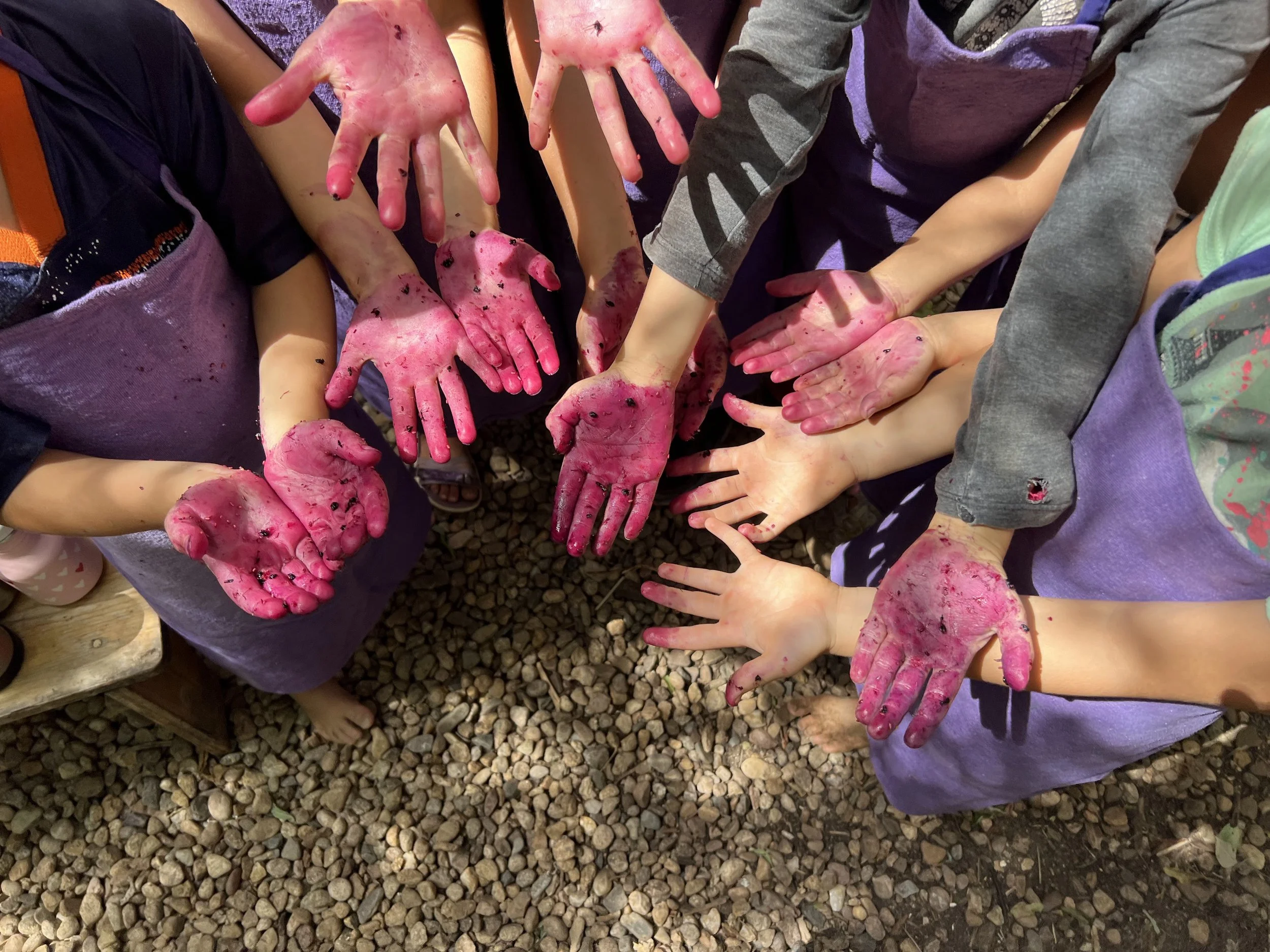
For example, in the fall, we gather elderberries with the children. We sit together and pull the berries from their stems, letting the work be slow but also joyful and silly. We make elderberry syrup together, also the kids paint with the smashed berries, hands stained purple, papers soaked with that rich purple color.
Meeting Imagination and Growth
Later, in the winter, that same syrup becomes medicine we use to help with colds and flus. The children know where it came from. They remember harvesting it. They remember the plants budding, fruit forming, picking it, making medicine—and also painting and staining their hands and faces.
Nature meets the children again and again, but each time in a different way. In spring and summer, the children learn the plants by being with them, touching them, tasting them, watching them grow. In fall and winter, those same plants return as teachers of medicine making and plant dyeing. The learning deepens because it is layered and lived, not “ taught” . Our Michaelmas fall celebration is one of those moments where everything comes together. We dye our silks with different plants each year sometimes calendula from the garden, and when the children wrap themselves in them, it feels like
they are wearing the very flowers they have been playing with all spring and fall. Golden. Warm. Alive. It’s hard to explain how exciting that is when children are literally wrapped in something they know so well.
When Children Explore and Learn through Nature’s Rhythm
Our medicine garden sits in the shape of a turtle, a big green back with thirteen little gardens along the sides. It’s a place the children know with their whole bodies. In the spring, it becomes the home for our musical theater performances. We gather in circles and do all kinds of activities all year long. During the growing/harvest season, the children drift through it, grazing on edible plants they have become friends with.
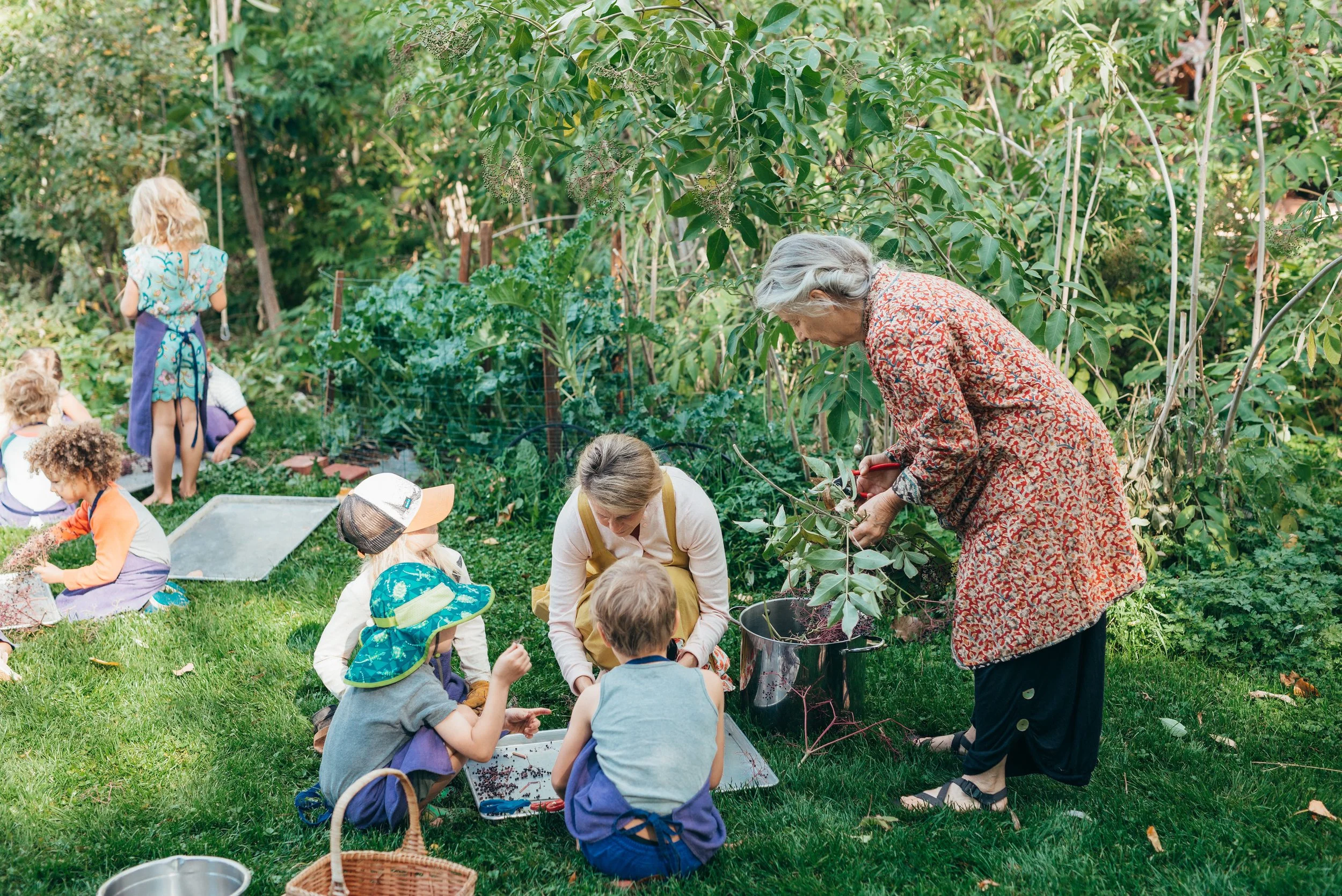
Fennel is always a favorite. So are the mints and the chives. The children dance though the space, tasting, smelling, checking what’s ready. This is a relationship.
Working with the Wheel of the Year has taught me that nature doesn’t just support a curriculum, it holds it. When we trust the seasons to lead, learning becomes something lived and remembered. Something that stains the hands, colors the cloth, feeds the body, and settles into felt memory. Once you see it happening, once you really trust it, it’s hard to imagine teaching any other way.
At Sage Programs in Boulder, Colorado, we honor the rhythms of nature as a teacher. We invite children into wonder, process, and participation in the natural world. Reach out to learn more. We would love to connect with you!